
AI Fashion Photography vs Traditional Photoshoot: Which One Actually Fits Your Brand?
For standard garments on clean backgrounds, results are often strong. Sheer fabrics, heavy embellishment, precise pattern matching, and high-shine materials remain the areas most likely to show visible limitations, though this continues to improve.
September 14, 2026 · SetlesStudio Team
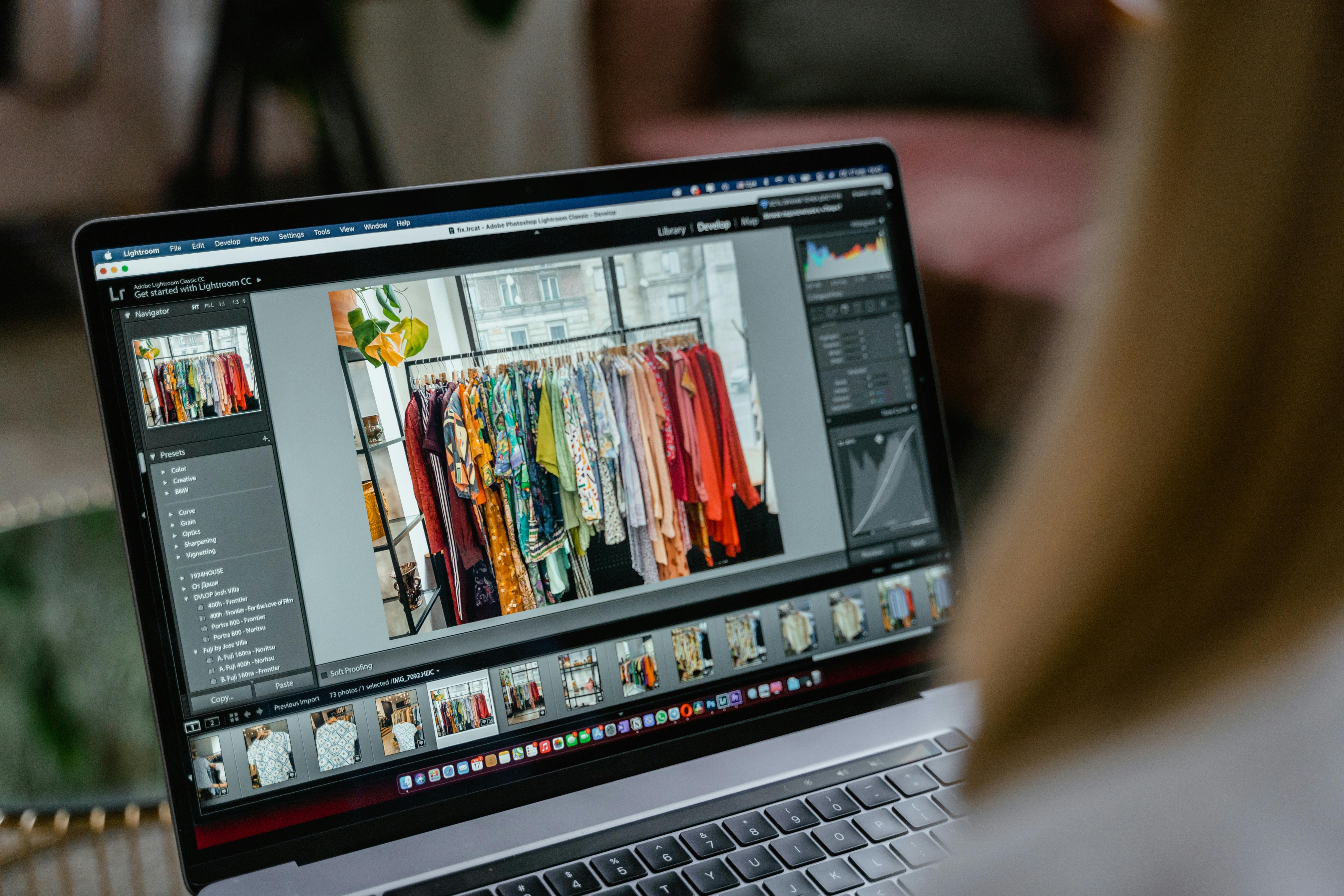
If you're comparing AI fashion photography to a traditional photoshoot, you're probably not looking for a hype piece about how AI is "changing everything." You're trying to work out which approach actually fits your catalog, your budget, and your timeline, and whether the two are meant to compete at all.
They're not, not entirely. AI fashion photography and traditional photoshoots solve different production problems, and most fashion and ecommerce brands end up using some mix of both rather than picking a permanent side. This guide walks through how each approach actually works, where each one holds up and where it doesn't, and how to think through the decision for your own catalog.
What Traditional Fashion Photography Involves
A traditional fashion photoshoot is, first and foremost, a production process. It requires physical samples, a booked studio or location, a photographer, and often a model, stylist, and hair and makeup team. Coordinating all of that takes time, and the process typically runs from initial booking through shooting, selects, and retouching before final images are delivered.
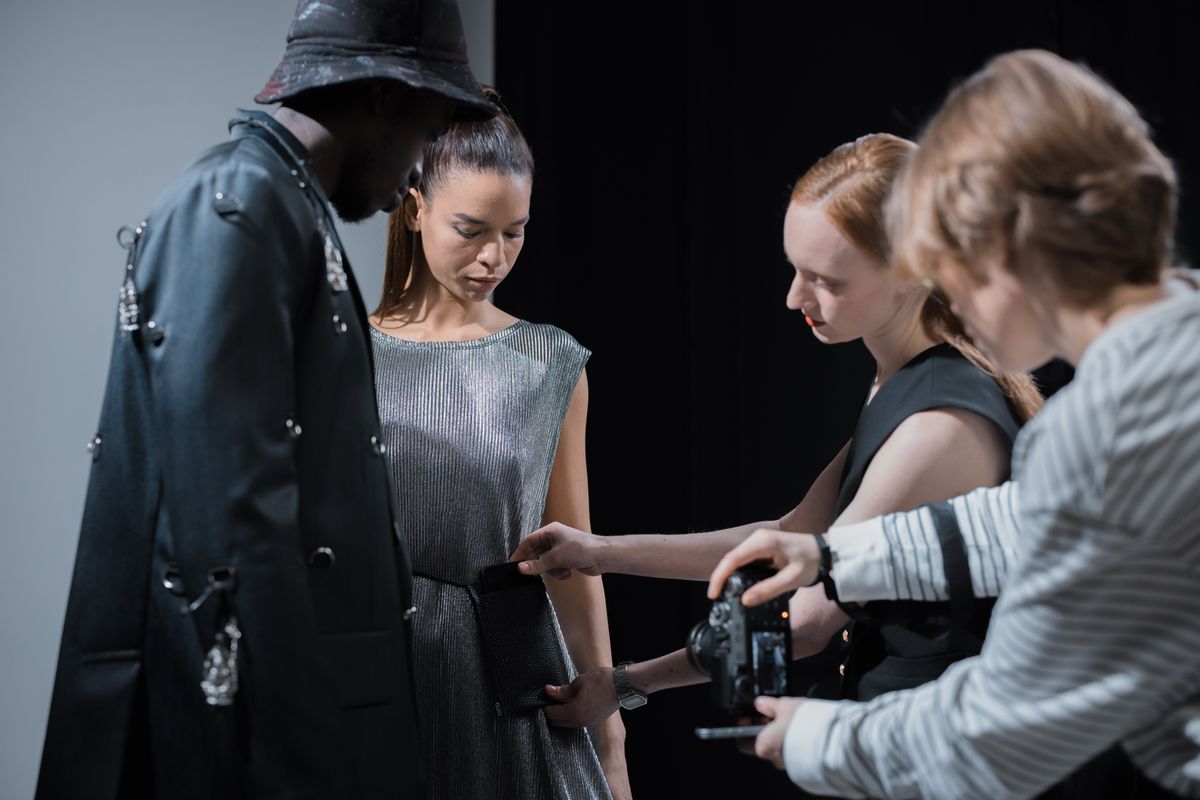
What you're paying for isn't just the photography itself. It's a photographer's ability to read how a fabric moves on a real body, adjust lighting and composition on the spot, and make creative judgment calls that are difficult to fully specify in advance. For campaigns built around mood, story, or a specific creative direction, that human decision-making is still hard to replace.
The trade-off is cost and scheduling. Traditional shoots don't scale down easily, every additional look adds time and expense, and reshoots or last-minute changes can be genuinely difficult to accommodate on a short timeline.
What AI Fashion Photography Involves
An AI fashion photoshoot works differently. Instead of photographing a model wearing the garment, you typically start with a flat-lay or mannequin image of the product, then use an AI platform to generate on-model imagery, along with variations like ghost-mannequin or additional angle shots, from that source photo.
Most platforms rely on generative image models trained on garment and body imagery. Rather than compositing a photo of a real person, the model predicts how a given fabric should drape, fold, and catch light on a human form, then renders that prediction as a new image. That's a meaningfully different process from traditional photography, and it's why results vary depending on the garment.
Simple, structured fabrics on a clean background tend to render very well. More complex materials, sheer fabric, heavy sequins, fine pattern matching across seams, high-shine leather, are still areas where AI-generated images can look slightly off, even on strong platforms. This gap tends to be smaller on tools trained specifically on a brand's own garments and past imagery rather than generic, one-size-fits-all models, though it hasn't disappeared entirely, and it's worth testing directly on your own products before committing a full catalog to it.
AI Fashion Photography vs Traditional Photoshoot: A Practical Comparison
| Traditional Photoshoot | AI Fashion Photography | |
|---|---|---|
| Production process | Requires physical samples, studio/location booking, model, styling team | Requires a flat-lay or mannequin image and an AI platform |
| Turnaround | Typically weeks, depending on scheduling and post-production | Typically much faster, often same-day for standard garments |
| Cost structure | Cost scales closely with each additional look or reshoot | Cost per image is generally lower, and scales more easily across large catalogs |
| Best for | Hero campaigns, editorial storytelling, complex or motion-dependent garments | Catalog and product-page imagery, frequent seasonal updates, large SKU counts |
| Realism for complex fabric | Generally accurate, since it's a real garment on a real body | Improving steadily, but still the area most likely to show visible limitations |
| Model diversity and variation | Limited by who is booked for the shoot | Easier to generate a wider range of body types and presentations from one source image |
| Creative flexibility | High, driven by a photographer and art director's real-time judgment | Growing, but still more constrained by what the platform and prompt can reliably produce |
Neither column is the "right" answer on its own. The table is meant to help you see which strengths matter most for what you're actually producing.
Where Traditional Photography Still Has an Edge
Garments in motion. A dress caught mid-stride or fabric moving in a breeze is still something a real shoot captures more convincingly than most AI tools.
Editorial and hero campaigns. When the imagery itself is meant to tell a story or set a mood, a photographer and art director's in-the-moment decisions are hard to fully replicate.
Highly detailed or textural garments. Fine lace, intricate beading, and distinctive leather grain often need to be exactly right, not just plausible.
Brand storytelling built around real people. Campaigns centered on a named model, founder, or athlete partnership are, by definition, not a fit for AI-generated imagery.
Where AI Fashion Photography Tends to Perform Well
Catalog and product-page consistency. Holding identical lighting and styling across a large SKU range is easier with a consistent generation process than across many separate shoot days.
Frequent updates. Refreshing imagery for a new season or restock is often closer to uploading a new flat-lay than scheduling a new production.
Representation across body types. Generating imagery across a wider range of sizes and presentations from one source image is generally more achievable than booking separate sessions for each.
Making on-model imagery viable for more of the catalog. Items that wouldn't otherwise get a dedicated shoot can still get on-model treatment, which matters for brands where budget has historically limited coverage to bestsellers only.
AI Lifestyle Photography vs On-Model Product Shots
It's worth separating two things that often get lumped together. AI on-model photography usually refers to clean, catalog-style product images against a plain or simple background. AI lifestyle photography places the same garment in a styled scene, outdoors, in an interior, in a social setting, meant to evoke a real moment rather than present the product in isolation.
Lifestyle imagery is generally the harder case for AI right now, since it asks the model to handle believable environments, natural interaction with a scene, and consistent lighting across a more complex composition. If lifestyle content plays a bigger role in your marketing than straightforward catalog photography, it's worth testing on a small batch before committing a full campaign to it.
What to Check Before Choosing an AI Fashion Photography Provider
Capabilities and policies vary meaningfully between platforms, so a few questions are worth asking before you commit:
- Is the model generic, or trained on your own product and brand imagery? Brand-trained models generally handle your specific fabrics and prints more reliably.
- What usage rights do you actually hold over the generated images? Being able to generate an image and holding full commercial rights to use it aren't always the same thing, so this is worth confirming in writing.
- What data was the underlying model trained on? It's reasonable to ask a provider directly rather than assume.
- Does the platform support any AI-content labeling your marketplace or ad platform may require? Disclosure expectations differ by platform and are still evolving, so this is worth checking case by case rather than assuming a single standard applies everywhere.
None of this is meant to be alarmist. It's the same due diligence you'd apply to any new production partner or software vendor.
Who Should Choose Which
Early-stage or small-catalog brands. If budget and speed matter more than a fully custom creative direction right now, AI fashion photography is usually the more practical starting point for product and catalog imagery, with traditional photography reserved for a small number of hero pieces if the brand story calls for it.
Growing brands with expanding SKU counts. This is typically where a hybrid approach makes the most sense: AI handles catalog volume and seasonal refreshes, while traditional photography covers flagship products and campaign work that needs a stronger creative hand.
Luxury or heritage brands. Where craftsmanship and brand story are central to how the product is sold, traditional photography often remains the stronger choice for campaign and hero imagery, even if AI is used behind the scenes for catalog variants like additional colorways or ghost-mannequin views.
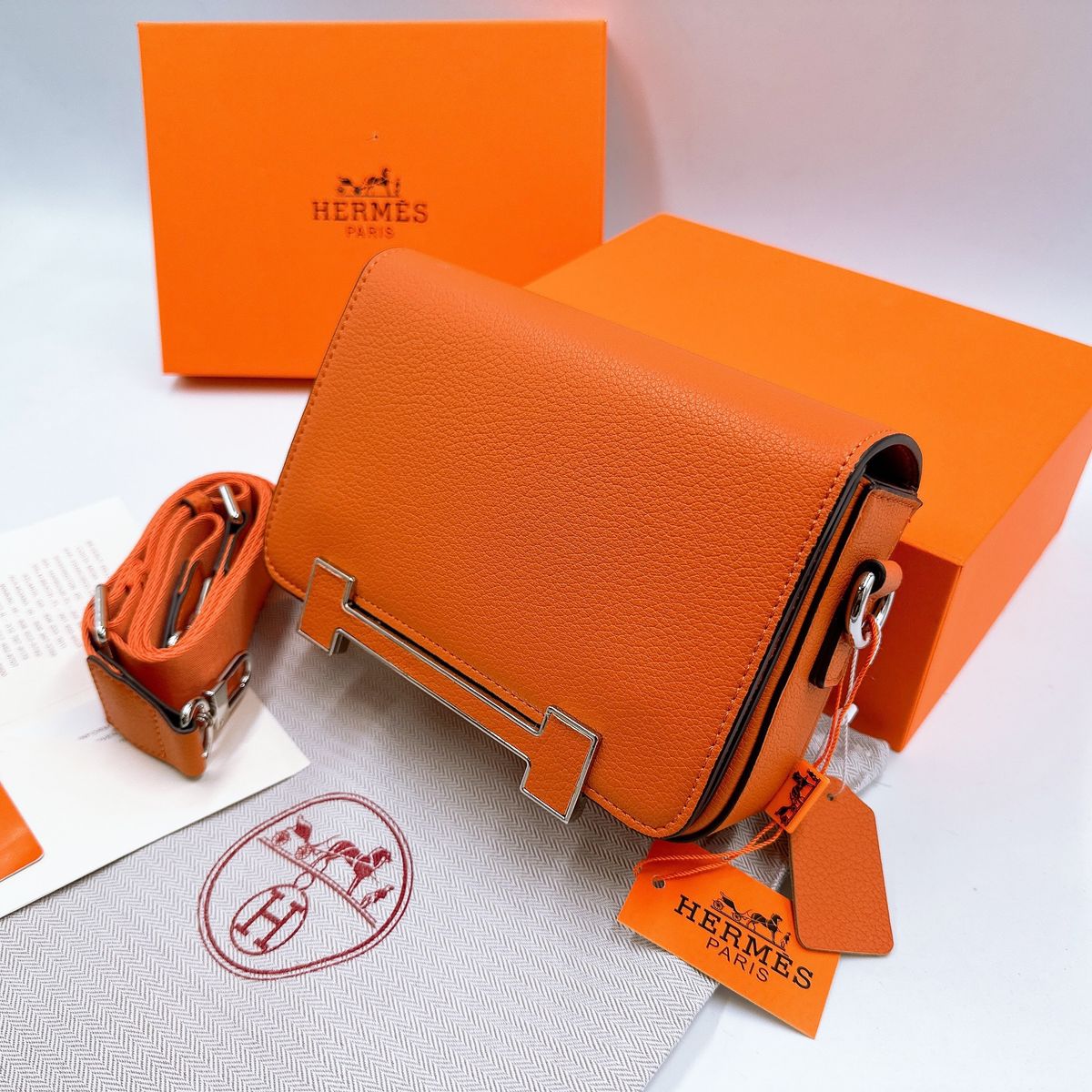
Marketplace-first sellers. On platforms like Amazon or Etsy, where consistency and volume across many listings matter more than editorial flair, AI fashion photography is often the more practical default, provided the platform's image and disclosure policies are followed.
Brands with a strong lifestyle or storytelling focus. If your marketing leans heavily on lifestyle imagery rather than clean product shots, it's worth testing AI lifestyle photography on a limited run first, since this is currently the harder use case for most AI platforms.
How SetlesStudio Approaches This
We work across both AI and traditional fashion photography production, and in practice, most of the brands we work with don't end up choosing one exclusively. A typical setup might use AI fashion photography for the bulk of catalog and product imagery, alongside traditional or hybrid production for hero shots, lifestyle campaigns, or garments where fabric behavior needs to be exactly right.
Our approach to AI fashion photography services generally starts with testing a brand's own products, rather than assuming generic results will translate, since realism varies noticeably by fabric type and garment complexity. For brands exploring category-specific needs, we also work on more specialized areas like AI handbag photography and luxury product imagery, where material accuracy and finish tend to matter even more than they do for standard apparel.
If you're not sure where the line should sit between AI and traditional production for your own catalog, that's usually a shorter conversation than people expect, and it's a good starting point before committing budget to either direction.
The Honest Takeaway
There isn't a single right answer between AI fashion photography and a traditional photoshoot, and that's not a hedge, it's genuinely how the decision plays out for most brands. Traditional photography still leads on creative control, complex fabric handling, and storytelling that depends on a real person. AI fashion photography leads on speed, scalability, and making on-model imagery viable across a wider share of a catalog. The brands that get the most value tend to treat this as an allocation question, what to shoot traditionally and what to generate, rather than a one-time decision between the two.
Frequently Asked Questions
Is AI fashion photography a full replacement for traditional photography?
Not currently, for most brands. It works well for standard catalog and product imagery, but campaigns involving complex fabric movement, intricate detailing, or storytelling built around real people still tend to benefit from traditional production.
Do you need a model release for AI-generated fashion models?
Traditional model releases aren't required since no real person's likeness is used, but it's important to confirm what usage rights you hold over the generated images and what data the model was trained on, since this varies by provider.
How realistic does AI fashion photography look right now?
For standard garments on clean backgrounds, results are often strong. Sheer fabrics, heavy embellishment, precise pattern matching, and high-shine materials remain the areas most likely to show visible limitations, though this continues to improve.
What's the difference between AI fashion photography and AI lifestyle photography?
AI fashion photography generally refers to clean, on-model product imagery, while AI lifestyle photography places the same garment in a styled, real-world setting. Lifestyle scenes are currently the more demanding use case and are worth testing before a full campaign commitment.
Is it acceptable to use AI-generated images for product listings?
Generally yes, provided the platform holds clear rights to the underlying model data and you follow your marketplace's current policies on AI-generated content and disclosure, which differ by platform and continue to evolve.
Read next
AI Fashion Photography for Clothing Brands: 2026 Guide
